January 29, 2026
 8 min
8 min  760 Views
NetSuite ERP Integration: Scale Faster with Seamless Integration and Automation


Modern companies rarely use only one software solution. Finance teams use accounting platforms, sales teams depend on their CRMs, warehouses run inventory managament tools, while e-commerce teams oversee websites, marketplaces, and shipping partners. When all these systems work separately, you end up with fragmended data, more manual work, and a lack of visibility.
NetSuite is a robust cloud ERP that unifies your finances, inventory, orders, procurement, and customer information. To get more benefit from NetSuite, connect it to the rest of your technology stack — your CRM, e-commerce systems, logistics providers, payment gateways, marketing tools, and analytics.
NetSuite ERP integration is a strategic capability. When linking this solution with your other platforms, you eliminate data silos, reduce manual data entry, and get real-time insights across your business. In this guide, we will demonstrate how integrating NetSuite can enable faster decision-making, higher productivity, and scalable growth.
What NetSuite ERP Integration Actually Involves
The integration means connecting NetSuite to your external software systems so that data flows back and forth automatically. Integrated systems exchange information through APIs, middleware platforms, or native connectors.
With integration in place, you can synchronize:
- Customer records and contact details
- Sales orders and invoices
- Inventory and warehouse activity
- Purchase orders and supplier confirmations
- Payment statuses and tax information
- Shipment tracking and fulfillment updates
This way, every team operates from a single source of truth, and your processes become more efficient. A reliable NetSuite integration setup supports two-way syncing, detects errors, lets you monitor, and scales as your business expands.
Business Benefits of the NetSuite ERP Solution
Operational Efficiency and Automation
Say goodbye to manual data entry and slow processing. Once your systems are connected, all reporting, tracking, and invoicing all work together seamlessly.
Real-Time Visibility and Decision-Making
Integrated systems give immediate access to data across sales, inventory, finance, and logistics. Leaders can monitor performance, catch problems early, and take action on new opportunities.
Data Accuracy and Compliance
When all information flows into a single system, duplicate records and reconciliation errors are reduced. Automated tax calculation, audit trails, and integrated regulatory reporting make it much easier to stay compliant.
Scalability and Growth Enablement
As your business grows, automation manages the increased workload. Integration with NetSuite makes it easier to expand into new markets, channels, or even countries.
Improved Customer Experience
Customers benefits as well. THey receive accurate inventory updates, quicker shipments, and consistent communication, which increases customer satisfaction and retention.
Essential Business Systems to Integrate with NetSuite
CRM Platforms
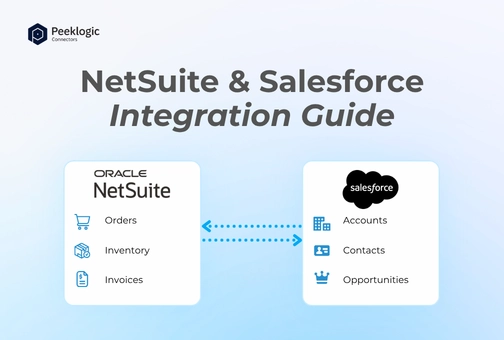
Sales and customer service teams rely on CRM systems such as Salesforce, HubSpot, or Zoho to manage leads and customer relationships. Connecting your CRM with NetSuite keeps customer profiles, order histories, invoices, and payments aligned. Sales and finance stay in sync, enabling better forecasting and customer experience management.
E-Commerce Platforms
Online stores such as Shopify, Magento, and WooCommerce generate a high volume of transactions daily. ERP integration sends online orders straight to NetSuite, updates inventory instantly, manages taxes, and automates invoicing. Your product catalog, pricing, and stock remain consistent.
Marketplaces and Sales Channels
Marketplaces such as Amazon, eBay, and regional platforms often operate alongside owned e-commerce stores. By linking these sales channels with NetSuite, you bring everything together: order management, inventory allocation, and financial reporting.
Logistics and Warehouse Systems
Your warehouse management systems (WMS), third-party logistics providers (3PL), and shipping solutions are always active, sending shipment updates, tracking details, and delivery confirmations back to NetSuite. This real-time communication leads to faster fulfillment and fewer errors.
HR, Payroll, and Finance Tools
Sync your HR platforms, payroll providers, and tax software with NetSuite, and everything runs smoothly. Automate employee data synchronization, payroll accounting, compliance reporting, and audit readiness.
E-Commerce Integration: Connecting Store, CRM, and ERP for Growth
In digital commerce, speed and accuracy decide whether you win or lose. When your online store, CRM and ERP systems don’t sync, businesses face delayed order processing, inaccurate stock levels, or limited insight into customer behavior.
That’s where NetSuite ERP installation steps in: it pulls everything together to effectively scale your business.
Picture this: a fresh order from an online store automatically flows into NetSuite as a sales order. Inventory updates instantly, while payments get matched with your financial records on the spot, keeping your revenue numbers clean and your tax reports headache-free.
Customer data flows from the store into your CRM, filling out profiles with purchase history, preferences, and engagement data. Sales and support teams gain a complete customer view across channels to improve personalization.
In addition, marketplaces and delivery services plug into this setup. Orders route automatically, shipments get tracked, customers receive real-time updates.
Three Common Methods to Integrate NetSuite ERP
Native Connectors
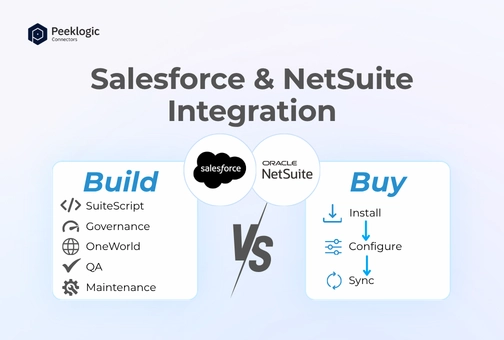
Many integration platforms provide prebuilt connectors for NetSuite and popular applications. These connectors make it easy to sync orders, automate invoices, or update inventory right out of the box. If you’re looking for quick deployment and don’t need much customization, native connectors usually get the job done fast.
API-Based Custom Integration
NetSuite exposes REST and SOAP APIs so that developers can create custom integrations from scratch. This path opens the door for advanced business logic, custom data models, and workflows that are unique to your company.
Integration Platforms (iPaaS)
Integration Platform as a Service solutions such as Celigo, Boomi, MuleSoft, and Jitterbit let you build, monitor, and scale integrations with minimal code. iPaaS platforms balance speed of deployment with flexibility and are commonly used with growing businesses.
Common Integration Challenges and How to Handle Them
- Data quality issues
Inconsistent or incomplete data can quickly undermine an integration. Set clear data standards and validation rules so information stays accurate from end to end. - Conflicting business rules
When systems follow different logic, errors and mismatches are inevitable. Align and document your business rules early. - Underestimating integration complexity
Integrations often appear trickier than expected. Break the project into smaller phases. - Legacy system limitations
Older platforms may not support modern APIs. In these cases, hybrid connectivity approaches can bridge the gap. - Insufficient error handling
If failures go unnoticed, downstream processes suffer. Build in strong exception handling and monitoring so you can fix issues quickly. - Operational disruption during rollout
Big-bang deployments increase risk. Go with incremental rollouts to minimize disruption. - Security and compliance concerns
Sensitive data needs protection — bake in encryption, access controls, audit logs, and privacy governance from day one to keep your integration safe.
Connect NetSuite and Streamline Business Processes
When fully integrated, NetSuite turns into your digital command center. Financials, inventory, procurement, fulfillment, customer data, analytics — they all come together in one clear view:
- Executives trust their reports.
- Operations teams spend more time improving business processes.
- IT teams manage robust and scalable integrations.
This kind of connected architecture is what keeps businesses competitive as markets get more digital and data-driven.
NetSuite ERP integration is a strategic investment that transforms disconnected systems into a cohesive digital ecosystem. Whether you’re linking CRM, e-commerce, logistics, marketplaces, or finance, integration brings automation, real-time visibility, and scale.
For e-commerce, this means orders, inventory, customers, and fulfillment flow together, boosting revenue and customer satisfaction. For larger enterprises, you get governance, compliance, and real-time insight across all operations.
With a solid integration strategy and the right partners, NetSuite becomes the backbone of a business that adapts, grows, and consistently delivers value.
Key takeaways
NetSuite ERP integration helps businesses connect finance, inventory, orders, CRM and other key systems in one smoother workflow. When NetSuite shares data with platforms like Salesforce, teams can reduce manual entry, avoid record mismatches and get clearer visibility into daily operations. With the right integration setup, companies can improve reporting, speed up processes and keep business data more accurate across departments.
Frequently Asked Questions
Simple integrations usually take a few weeks, while complex multi-systems require a few months.
Yes. Tons of connectors and iPaaS solutions out there make it easy to tie NetSuite to big e-commerce players like Shopify, Magento, and Amazon.
Custom APIs give you more flexibility, but they also mean more work to build and maintain. iPaaS is quicker to roll out and scales up without much hassle.
You’ll run into data that doesn’t line up, slowdowns in your operations, messed-up reports, and trouble growing your business.
With low-code platforms, business folks can handle simple integrations on their own. But once things get complicated, having developers in the mix really helps.


Salesforce Integration & Implementation | AppExchange and Custom Development | Data Migration
Contact us today!